Key takeaways
- L-ascorbic acid is pure vitamin C; ascorbyl glucoside is a glucose-linked derivative that skin enzymes can convert into ascorbic acid.
- Pure ascorbic acid is harder to keep stable in water-based formulas and more often stings; ascorbyl glucoside is usually easier to store and tolerate.
- Head-to-head lab comparisons are formula-specific. Do not treat one percentage as universally equal to another.
- Use either form with morning sunscreen. Pause if irritation persists, and ask a clinician when needed.
What is each form of vitamin C?
L-ascorbic acid (often shortened to ascorbic acid) is the active vitamin C molecule itself. In skincare, it is prized as a water-soluble antioxidant. On a label, “vitamin C” frequently means this form—or a derivative that is meant to behave like it after conversion.
Ascorbyl glucoside (also called ascorbic acid 2-glucoside, or AA2G in research papers) attaches a glucose unit to ascorbic acid. That sugar “cap” is the main reason the ingredient tends to hold up better in a bottle. After you apply it, skin enzymes can cleave the glucose and release free ascorbic acid.
A product that says “vitamin C” can therefore mean pure ascorbic acid, ascorbyl glucoside, or another derivative. Reading the INCI line matters more than the front-of-pack buzzword. For a wider frame on how actives work in a routine, see what is an active in skin care.
| Ascorbic acid (L-ascorbic acid) | Ascorbyl glucoside | |
|---|---|---|
| What it is | Pure active vitamin C | Glucose-linked derivative / prodrug |
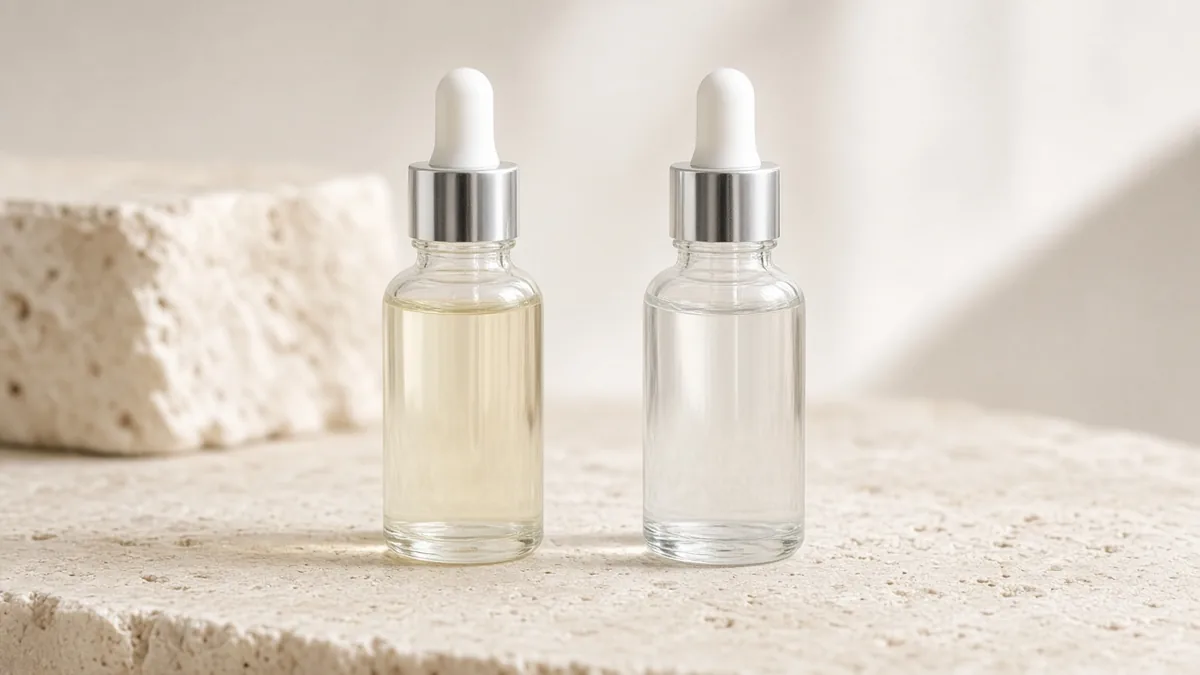
| Stability in formula | Oxidizes easily; color can shift toward yellow or brown | Generally more chemically stable in storage |
| Typical formula feel | Often built for a more acidic leave-on system | Often used near a milder, more skin-friendly pH |
| Conversion needed? | No — already active | Yes — enzymes release ascorbic acid |
| Irritation tendency | Higher chance of sting or flush on sensitive skin | Usually gentler for beginners or reactive skin |
| Evidence maturity | Longest history as topical vitamin C | Growing; fewer head-to-heads than pure AA |
How do they differ, side by side?
A 2012 review in the Journal of Cosmetic Dermatology (abstract on PubMed) captures why formulators reach for derivatives at all. Nicholas Stamford notes that “the instability of this water-soluble vitamin, together with difficulties associated with its topical delivery, has presented issues for the formulation chemist.”
Retail education pages often teach that classic ascorbic acid serums sit around a low pH (commonly described near or below about 3.5) while ascorbyl glucoside can live closer to skin-neutral ranges. Treat those bands as formulation teaching, not a universal rule for every product. Stability, packaging, and the rest of the formula still decide how the serum behaves on your shelf and on your face.
Brand blogs disagree on “potency.” Some call glucoside milder by design; others highlight studies where a lower glucoside level matched antioxidant markers of a much higher ascorbic acid product. Both stories can be partly true for the formulas tested—and still fail as a blanket ranking. That disagreement is why a side-by-side table beats a single winner badge.
How does ascorbyl glucoside become active on skin?
Think of ascorbyl glucoside as a prodrug: the bottle holds a protected form; the skin unlocks it. Research and safety assessments describe percutaneous uptake and metabolism toward ascorbic acid after topical use.
In a 2021 International Journal of Cosmetic Science study (PubMed: Jacques et al.), researchers compared two commercial products: one delivering 15% ascorbic acid in an optimized acidic system, and another with 1.8% ascorbic acid 2-glucoside at a physiological pH. On viable human skin explants, AA2G was metabolized to ascorbic acid before material reached the receptor compartment, and the skin held both parent compound and ascorbic acid—consistent with a reserve that can keep releasing active vitamin C. Absolute micrograms of ascorbic acid in the skin were higher after the 15% ascorbic acid formula, yet three oxidative-stress readouts showed similar protective effects for those two products. Unlike ascorbic acid, AA2G stayed chemically stable under the study’s storage conditions. The authors concluded that, in that comparison, a lower AA2G concentration could match antioxidant effects while avoiding the need for an acidic formula with a pH below 3.5.
That is useful context—not a promise that every 1.8% glucoside serum equals every 15% ascorbic acid serum on the market.
On the safety side, the Cosmetic Ingredient Review (CIR) Expert Panel reviewed ascorbyl glucoside as used in cosmetics. From the CIR final report (2020 PDF):
“safe in cosmetics in the present practices of use and concentration described in this safety assessment” — Cosmetic Ingredient Review
CIR is a safety conclusion for reported cosmetic uses and concentrations, not an efficacy ranking and not approval of drug-style bleaching claims. In the United States, skin bleaching is regulated as a drug use; cosmetic vitamin C products should stay in cosmetic territory.
Formulators often pick ascorbyl glucoside when they need a more oxidation-resistant water-soluble vitamin C path at a near-skin-friendly pH, and reserve classic L-ascorbic acid for systems built to manage acidity, air, and light. How a lab builds that system is part of broader cosmetic formulation craft—ingredient choice is only one lever.
When should you choose one over the other?
Lean toward ascorbyl glucoside if:
- Your skin is sensitive, barrier-compromised, or new to vitamin C.
- You want a daily antioxidant serum that is less likely to sting.
- You prefer formulas that are easier to keep stable in a clear or lightly tinted bottle (still store them cool and away from direct sun).
- You are comparing ascorbyl glucoside vs vitamin C on a shelf and mainly want the gentler derivative path under the vitamin C umbrella.
Lean toward ascorbic acid if:
- Your skin already tolerates acidic actives without redness or prolonged sting.
- You specifically want the classic pure-acid form and will replace the bottle when color or smell shifts.
- You are comfortable with a formula designed around ascorbic acid’s delivery needs (including careful packaging).
Neither is “wrong.” Choose the form you will use consistently without damaging your barrier. If you already like a calm retinoid alternative such as bakuchiol serum, layering decisions still start with tolerance: add one new active at a time.
How should you use either form day to day?
- Patch test on a small area for a few days before full-face use.
- Start every other morning if you are sensitive; build to daily only if your skin stays calm.
- Apply on clean, dry skin, then moisturizer if you need it, then sunscreen.
- The American Academy of Dermatology’s public guide for skin care in your 20s notes that vitamin C can help with skin aging and dark spots. Board-certified dermatologist Rebecca Baxt, MD, FAAD, tells patients: “Apply it after washing your face in the morning, before you put on your sunscreen.”
- Keep the bottle tightly closed. Discard ascorbic acid serums that turn deep orange-brown or smell off.
- If burning, swelling, or a rash appears, stop and seek clinical advice when symptoms are more than mild, short-lived sting.
Sunscreen is not optional marketing. Antioxidant serums complement UV protection; they do not replace it.
The evidence for one vitamin C and E combination is discussed in our guide to ferulic acid benefits, with the limits of those studies made explicit.
Where do other vitamin C derivatives fit?
People searching vitamin C derivatives for skin are usually trying to decode a crowded INCI list. Beyond ascorbyl glucoside and ascorbic acid, common water-soluble options include magnesium ascorbyl phosphate and sodium ascorbyl phosphate. Oil-soluble esters such as tetrahexyldecyl ascorbate show up in creamier textures. Each trades a different mix of stability, solubility, and conversion behavior.
You do not need every derivative. You need one well-made product you tolerate, used with sunscreen. Derivatives are tools for different formula bases—not a ladder where a higher number always wins. Soothing or barrier-minded ingredients such as beta-glucan can sit in the same routine when your goal is comfort alongside antioxidants.
Quick checklist before you buy or switch
- Does the INCI say ascorbic acid, ascorbyl glucoside, or another derivative?
- Is the packaging opaque or air-limiting if the formula is pure ascorbic acid?
- Has your skin recently been peeling, sunburned, or reactive to acids?
- Do you already have a morning SPF 30+ broad-spectrum habit?
- Are you changing only one active this week so you can read your skin’s response?
- Are your expectations realistic (weeks of consistent use, not overnight “clinical %” miracles)?
If most answers point to caution, start with ascorbyl glucoside. If your skin is resilient and you accept more formula upkeep, ascorbic acid remains a classic option.
FAQ: questions people ask next
Is ascorbyl glucoside as strong as ascorbic acid?
It depends on the whole formula, not the INCI name alone. Some controlled comparisons of specific products show similar antioxidant readouts even when ascorbic acid concentrations look much higher on the label. Other education sites still describe glucoside as milder because conversion is gradual. There is no single percentage that proves one always “wins.”
Can sensitive skin use ascorbic acid?
Sometimes, at lower use frequency and with a well-buffered routine—but many sensitive users do better starting with ascorbyl glucoside. Sting that fades in seconds differs from lasting redness; lasting redness means stop.
Does a yellow vitamin C serum mean it is ruined?
Deep amber or brown ascorbic acid serums often signal oxidation and are usually discarded. Pale straw can be normal for some formulas. When unsure, follow the brand’s storage guidance and trust smell plus color change together.
Is ascorbyl glucoside vs vitamin C a different question?
Mostly wording. “Vitamin C” is the umbrella; ascorbyl glucoside is one derivative under it. Ascorbic acid is the pure form. Comparing ascorbyl glucoside vs ascorbic acid is the precise chemistry choice inside that umbrella.
Can I use vitamin C with bakuchiol or other serums?
Often yes, if your barrier is calm. Introduce one product at a time. Alternate nights or mornings when stacking multiple actives.
Choose for your skin, not the louder label
Ascorbyl glucoside vs ascorbic acid is less about crowning a champion and more about matching stability and comfort to your face. Ascorbic acid is the direct active with the longest topical track record—and the fussier bottle. Ascorbyl glucoside trades some of that classic intensity for better storage behavior and, for many people, an easier daily experience.
Read the INCI, pair either form with sunscreen, and let your skin’s tolerance—not marketing volume—decide the winner. Browse related face care formulas when you want to see how antioxidant serums sit beside other leave-on products on a real shelf.