Key Takeaways
- HRIPT testing asks whether repeated patch exposure shows irritation or sensitization signals under a defined human-panel design.
- It does not prove “allergy-free,” drug-style approval, or coverage of every fragrance and pack variant.
- Protocol details—induction, rest, challenge, scoring, inclusion criteria—control what the conclusion can support.
- Marketing lines must stay inside the study endpoints and population described on the report.
- Retest when formula, fragrance, use level, or leave-on/rinse-off exposure profile changes in a material way.
What this study design is built to answer
At its core, HRIPT testing is built to detect two related dermal questions under controlled patch wear:
- Irritation during repeated applications (does the site show reactive scores under the study rules?).
- Sensitization risk signals, typically evaluated after an induction phase, a rest period, and a challenge application (does the challenge response pattern suggest sensitization under that design?).
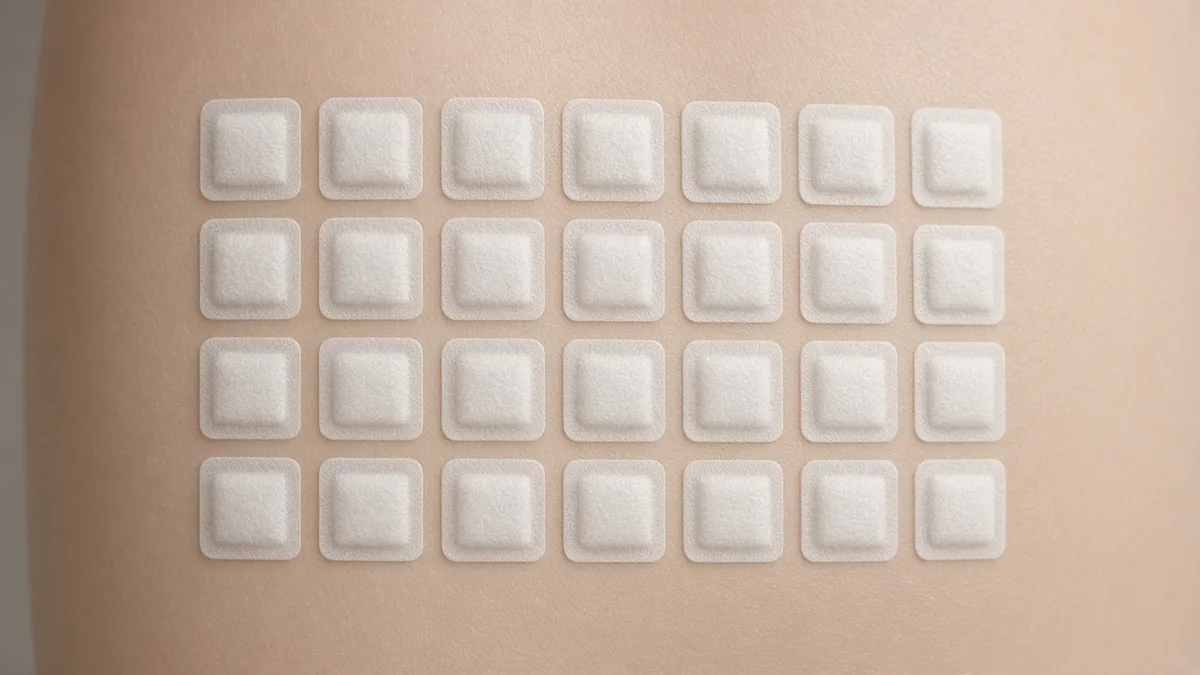
Labs describe panels, patch type (occlusive or semi-occlusive), wear time, and scoring scales in the protocol. Your usable conclusion is only as strong as that written design.
HRIPT sits in the broader safety-screening family alongside other dermal or in vitro tools. It is one evidence type—not the entire safety substantiation file.
Questions this design does not settle
Be explicit with stakeholders:
“Neither the law nor FDA regulations require specific tests to demonstrate the safety of individual products or ingredients.”
| Question people hope HRIPT answers | What you usually get instead |
|---|---|
| “Is this product safe for every user worldwide?” | Data on a defined panel under patch conditions—not universal safety |
| “Can we claim hypoallergenic with no limits?” | At most a carefully worded statement tied to study design—if counsel and the report support it |
| “Are we FDA approved?” | Cosmetics are not cleared like many drugs; see FDA cosmetics |
| “Did fragrance X and fragrance Y both pass?” | Only the exact formula/version on the report cover |
| “Is the preservative system adequate?” | Microbial / challenge work answers that; HRIPT does not replace it |
| “Will the jar leach plasticizers?” | Packaging compatibility answers that |
How a typical protocol is described (high level)
Exact schedules vary by laboratory SOP. The outline below is general industry practice, not a prescription and not a claim that any ISO full text was applied without the lab naming it.
- Screening and consent — Healthy volunteers meeting inclusion/exclusion rules; written informed consent.
- Induction phase — Repeated applications of the test material under patch on a marked skin site, with rest between wears as the SOP requires.
- Rest / incubation period — Time without test material so that a sensitization response, if developing under the design, can be evaluated at challenge.
- Challenge phase — Re-application (often on a naive site as the protocol specifies) and scored readings at set intervals.
- Scoring and interpretation — Trained graders record erythema, edema, and other graded signs; the study director interprets irritation vs sensitization patterns per SOP.
- Reporting — Formula identity, concentration / use instructions as tested, panel size completing the study, adverse events, and conclusion language.
Some studies reference ISO or other dermal irritation / sensitization guidance as general industry practice. Confirm the exact designation and version printed on your report rather than assuming a standard number from a blog.
Leave-on vs rinse-off products may use different application instructions (neat, diluted, or as-use). The report should say which.
Irritation vs sensitization: reading the difference
Irritation scores during induction can rise with concentration, occlusion, or sensitive sites. High irritation can also complicate sensitization reading—another reason protocols manage dose and patch type carefully.
Sensitization interpretation usually hinges on the challenge pattern relative to induction and controls, not on a single red mark on day one.
When you review a PDF:
- Separate “irritant responses observed” from “no evidence of sensitization under this design.”
- Note dropouts and adverse events.
- Confirm whether the material was tested as sold, diluted, or as a concentrate.
Do not translate “no sensitization detected in N subjects” into “will never sensitize anyone.” Panel size and inclusion rules bound the claim.
When a human panel study fits—and when to wait
Often in scope when:
- The finished formula (or a decisive concentrate) needs a human repeat-insult datapoint for the safety file.
- Leave-on facial or body products carry higher dermal exposure and stakeholders expect clinical-style evidence.
- A prior screening suggested follow-up, or a retailer / partner questionnaire asks for HRIPT-style documentation.
- You changed fragrance load or key actives and need updated human-panel evidence.
- You are aligning a shared evidence pack across regions that ask for human repeat-insult style documentation, even when local rules do not name HRIPT explicitly.
Often premature when:
- The chassis is still changing weekly.
- You have not locked leave-on vs rinse-off use instructions.
- You only need pack or micro answers (wrong tool).
- You are still deciding between multiple fragrance houses without a lead candidate.
- Budget is limited and a cheaper irritation screen is enough for the current decision gate—then schedule HRIPT later once the formula freezes.
Waiting until formula lock is usually cheaper than repeating a full panel after every tweak. Write the decision gate down: “HRIPT after fragrance lock” beats an informal “we will see.” That single line prevents orphan PDFs that no longer match the shipped formula.
How to read conclusions vs marketing claims
Map every public sentence to a report line.
| Report-style conclusion | Risky rewrite to avoid |
|---|---|
| “Under the conditions of this study, the test material did not indicate sensitization in the panel tested.” | “Allergy-proof for all skin types.” |
| “Mild irritation noted in X subjects during induction; resolved as described.” | Hide irritation language and only quote “passed.” |
| “Tested at 100% as a leave-on cream.” | Apply the same line to a 5× concentrate or a different fragrance variant. |
| “N subjects completed.” | Imply thousands of users or pediatric use if neither was studied. |
When to retest after formula or fragrance changes
Plan a retest discussion when:
- Fragrance, essential oil, or allergen-declaration profile changes
- Preservative system or pH-targeting system changes in a way that alters dermal exposure (confirm with your safety reviewer—do not invent numeric triggers here)
- Active level or leave-on exposure time changes
- Product flips from rinse-off to leave-on positioning
- You switch from a diluted test concentration to neat finished goods (or the reverse) for claims
Document the rationale if a reviewer decides an old HRIPT still covers a minor change. Silence is not a rationale.
Buyer report checklist
Educational checklist for filing HRIPT testing evidence:
- Study title clearly states Human Repeat Insult Patch Test (or equivalent SOP name).
- Test article ID matches your formula / fragrance version.
- Concentration and use instructions as tested are printed.
- Patch type (occlusive / semi-occlusive), site, and wear schedule are listed.
- Induction, rest, and challenge phases are dated.
- Panel size enrolled vs completed is shown.
- Inclusion / exclusion summary is present.
- Scoring scale and reading times are defined.
- Irritation findings and sensitization conclusion are separate sentences.
- Adverse events / dropouts are disclosed.
- Out-of-scope notes (other variants, other packs, other markets) are copied into your claim map.
- Marketing copy has been checked against conclusion wording—not against a slide summary alone.
FAQ
Is HRIPT testing required for every cosmetic?
No universal “every cosmetic must have HRIPT” rule replaces a full safety approach. Teams choose methods based on exposure, claims, retailer expectations, and the safety assessor’s plan. Confirm obligations for your market via primary regulators such as the FDA cosmetics pages and qualified advisors.
Does a passing HRIPT mean the product is hypoallergenic?
Not automatically. “Hypoallergenic” is a marketing-sensitive term. Only use it if your counsel and the study design support a precise, non-misleading statement. Many teams avoid the word and stick to protocol language.
Can we use a supplier’s HRIPT for our finished fragrance variant?
Only if the tested article is the same formula version you will sell—or a reviewer documents bridging logic. A base without fragrance is not the same test article as a fragranced finished good.
How is HRIPT different from a single 24- or 48-hour patch?
Single application patch tests mainly screen short-term irritation under that design. HRIPT adds repeated insult plus a challenge structure aimed at sensitization signals. Different question, different report.
Should HRIPT replace microbial challenge testing?
No. Microbial preservation and dermal sensitization are separate risk lanes. Keep both on the product testing map when each risk applies.
Where does MoCRA fit?
MoCRA heightens expectations around facility registration, product listing, and safety substantiation for covered cosmetics. HRIPT may be one input to a safety file; it is not a complete MoCRA program. See the MoCRA overview.