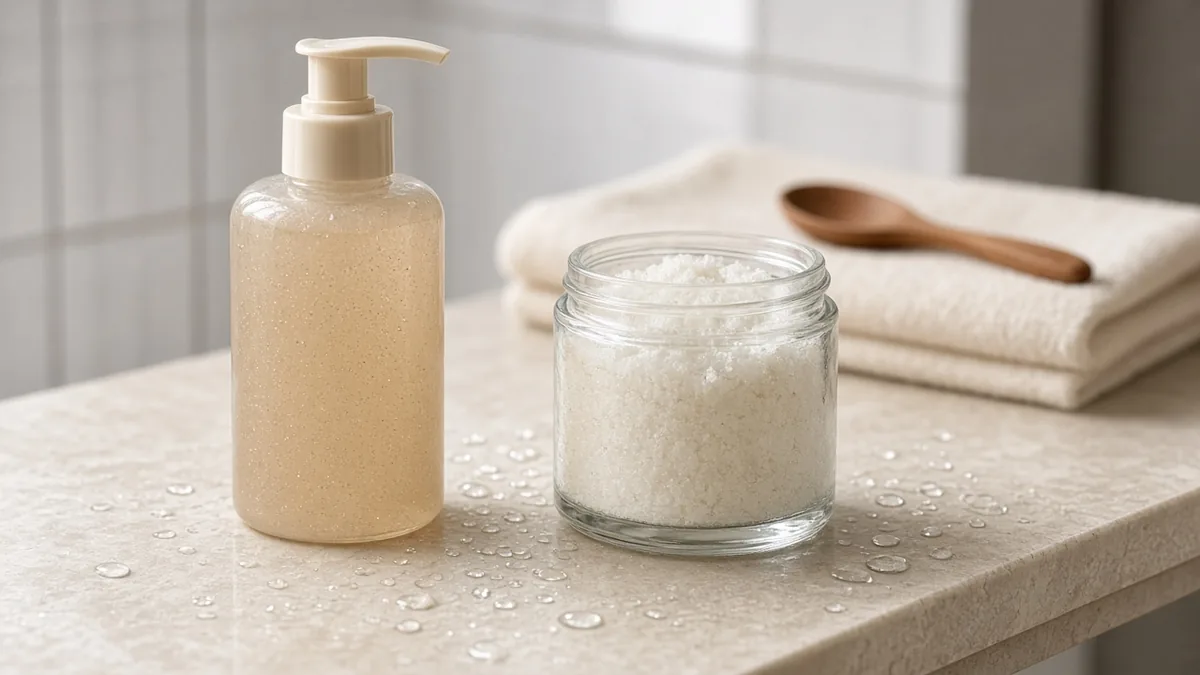
Body wash vs bar soap is not a simple choice between “gentle liquid” and “harsh solid.” Either format can be mild or drying. The complete cleansing system, fragrance, use amount, water temperature, shower length, storage, and your skin condition matter more than the package shape alone. A smart comparison starts with the actual formula and the way your household uses it, then considers convenience, waste, travel, and price per wash.
Key takeaways
- A liquid body wash uses a formulated surfactant system in a water-based product; a cleansing bar may be traditional soap or a synthetic-detergent bar.
- Choose by formula and routine, not by assuming every bar is drying or every wash is gentle.
- Bars need drainage between uses. Bottles need clean dispensing and sensible storage.
- Cost and environmental impact depend on how much you use, package size, shipping, product life, and disposal.
Are all cleansing bars actually soap?
No. In everyday speech, people call almost every solid cleansing bar “soap,” but the formulas can be very different.
Traditional soap is made from fatty acids and alkali and is generally alkaline. A syndet bar—short for synthetic detergent bar—uses non-soap surfactants and can be designed at a different pH with a different skin feel. A liquid body wash also uses surfactants, usually as a blended system that controls cleansing, foam, viscosity, rinse, and mildness.
The legal meaning of soap is narrower than the everyday meaning.
“Not every product marketed as soap meets FDA's definition of the term.” — U.S. Food and Drug Administration
The FDA's explanation of cosmetics, drugs, and soap describes the conditions a product must meet to be regulated as soap in the United States. That is why “bar” does not automatically tell you whether the cleanser is traditional soap, a cosmetic cleansing bar, or a medicated product.
If your real question is how liquid body wash differs from another liquid format, read our separate guide to body wash versus shower gel. This article keeps the comparison liquid versus solid.
How do cleansing and skin feel compare?
A surfactant is an ingredient that helps water lift oil and soil from the skin so they can rinse away. Finished cleansers usually combine surfactants and supporting ingredients rather than relying on one ingredient alone.
| Decision point | Liquid body wash | Cleansing bar |
|---|---|---|
| Formula structure | Water-based surfactant system with viscosity and preservation needs | Traditional soap or syndet system formed into a solid bar |
| Dosing | Easy to pump or pour too much | Use depends on rubbing time and contact with hands or cloth |
| Skin feel | Can range from light-rinsing to creamy or conditioned | Can range from squeaky-clean to creamy and low-foam |
| Fragrance | Often disperses strongly in the shower | Can also be strongly fragranced; format is not a sensitivity guarantee |
| Residue | Depends on surfactants, polymers, oils, and rinse | Depends on soap/syndet base, water hardness, and rinse |
| Preservation | Water-containing systems need an appropriate preservation strategy | Lower-water solid systems have different microbial and storage considerations |
The phrase “soap strips the skin” is too broad. Some traditional soaps can feel drying, especially with hot water and repeated washing, but a solid syndet bar may be designed for sensitive skin. Likewise, a heavily fragranced or aggressive liquid wash can feel uncomfortable even if the label says “moisturizing.”
Judge the ingredient list, claims, directions, and your own response. Foam level is not a reliable measure of cleanliness or mildness.
Which format fits sharing, storage, and travel?
Sharing and dispensing
A pump bottle makes it easy for several people to dispense product without touching the remaining formula. That convenience does not make every bottle automatically cleaner; wet hands, pooled water, and a dirty pump can still create a messy shower environment.
A bar is touched directly, but it is also rinsed during use. The practical priority is to let it drain and dry instead of leaving it in standing water. People with active skin infections should follow clinical advice and avoid sharing personal washing items.
Shower storage
Liquid wash needs a stable bottle, a cap or pump that works with wet hands, and enough space to avoid repeated falls. A bar needs a draining soap dish or rack. Poor drainage makes the bar soft, shortens its life, and leaves residue on the shelf.
Travel
A dry bar is compact and does not count toward liquid limits, but it needs a ventilated case after use. Liquid wash is easy to dispense and familiar, but it can leak and may need a travel-size container.
If exfoliation is part of your routine, do not use this format choice as a substitute for frequency guidance. Our body scrub versus body wash guide explains the different jobs those products perform.
What about cost and packaging?
There is no universal winner.
A bar may use less packaging and ship without as much water, but it can disappear quickly if it sits wet or if several people use it heavily. A paper carton is not automatically low-impact if it has coatings, mixed materials, or poor local recycling options.
A body wash may last well with a controlled pump, especially when a small amount spreads easily. The trade-off is a bottle, pump, label, and a water-containing product that is heavier to transport. Refill systems can reduce packaging per use, but only when the refill and main pack are actually reused and recycled as intended.
For a fair comparison, ask:
- How many washes does the product provide in your household?
- Does the package prevent over-dispensing?
- Can the bar dry fully between uses?
- Are the package materials accepted locally?
- Will you finish the product, or abandon it because you dislike the skin feel?
The most sustainable product is not simply the one with the least visible packaging. Use rate, product waste, shipping, and disposal all matter.
Which is better for dry or sensitive skin?
Choose a mild formula and a gentle routine in either format.
The American Academy of Dermatology's dry-skin guidance recommends short, warm rather than hot showers and gentle, fragrance-free products. MedlinePlus dry-skin self-care similarly advises limiting harsh soaps and using mild cleansers.
Look for:
- A fragrance-free option if fragrance triggers irritation.
- A mild cleansing claim supported by a suitable formula, not just a “natural” label.
- A comfortable rinse without tightness or burning.
- Clear directions and no unnecessary scrubbing.
- Moisturizer applied soon after bathing if your skin is dry.
Avoid very hot water, long showers, rough washcloth use, and repeated cleansing of already-dry areas. If a product causes persistent itching, cracks, or a rash, stop using it and seek medical advice rather than rotating through more cleansers.
For ingredient-positioning questions, the guide to choosing a plant-based body wash covers a separate decision without implying that plant origin guarantees mildness.
A quick checklist before you choose
Choose body wash when most of these fit:
- I prefer pump dispensing or a shared household bottle.
- I want a creamy or fluid texture with easy spread.
- I have space for a bottle and can prevent leaks.
- I am willing to compare formulas instead of buying by foam level.
Choose a cleansing bar when most of these fit:
- I want a compact solid for home or travel.
- I have a draining dish and can let it dry.
- I prefer controlled rubbing rather than pumping.
- I have checked whether the bar is traditional soap or syndet.
For dry or sensitive skin, add one more rule: pick the mildest formula you tolerate and keep the shower routine gentle, whatever the format.
A short formulation and manufacturing note
The authorized VN-HCM-02 semi-finished formula adjustment case recorded changes to texture, sensory profile, and fragrance direction. It was not documented as a body-wash project. The adjacent lesson is still useful: a liquid cleanser's viscosity and rinse feel belong to the complete surfactant system, so a sensory change should not be evaluated in isolation.
The authorized US-OH-08 filling and packing case included filling trials, first-piece approval, fill-accuracy checks, and packing-integrity review. It does not compare liquid and bar manufacturing. It supports a narrower point: liquid body wash performance includes how the formula fills, dispenses, and survives in its package, while a bar uses a different manufacturing platform.
Brand teams reviewing liquid formats can use the body-cleansing category as a commercial starting point while keeping formula, packaging, claims, and market requirements product-specific.
Frequently asked questions
Is bar soap sanitary?
A bar can be used hygienically when it is rinsed, stored on a draining surface, and not shared during an active infection. Do not leave it in pooled water, and keep personal washing items personal when health guidance calls for it.
Is body wash always better for dry skin?
No. A mild syndet bar may suit dry skin better than a harsh or heavily fragranced liquid wash. Compare the formula and your skin response.
Does bar soap clean better?
Not automatically. Both formats can remove everyday oil and soil when used correctly. More foam, stronger fragrance, or a squeaky feel does not prove better cleaning.
Which format lasts longer?
It depends on dose and storage. A controlled pump can make liquid last longer, while a well-drained bar can be efficient. Over-pumping or leaving a bar wet wastes product.
Which is better for travel?
A dry bar avoids liquid limits and leaks. A travel-size wash may be more familiar and easier to use in shared facilities. Choose based on drying time, container security, and trip length.