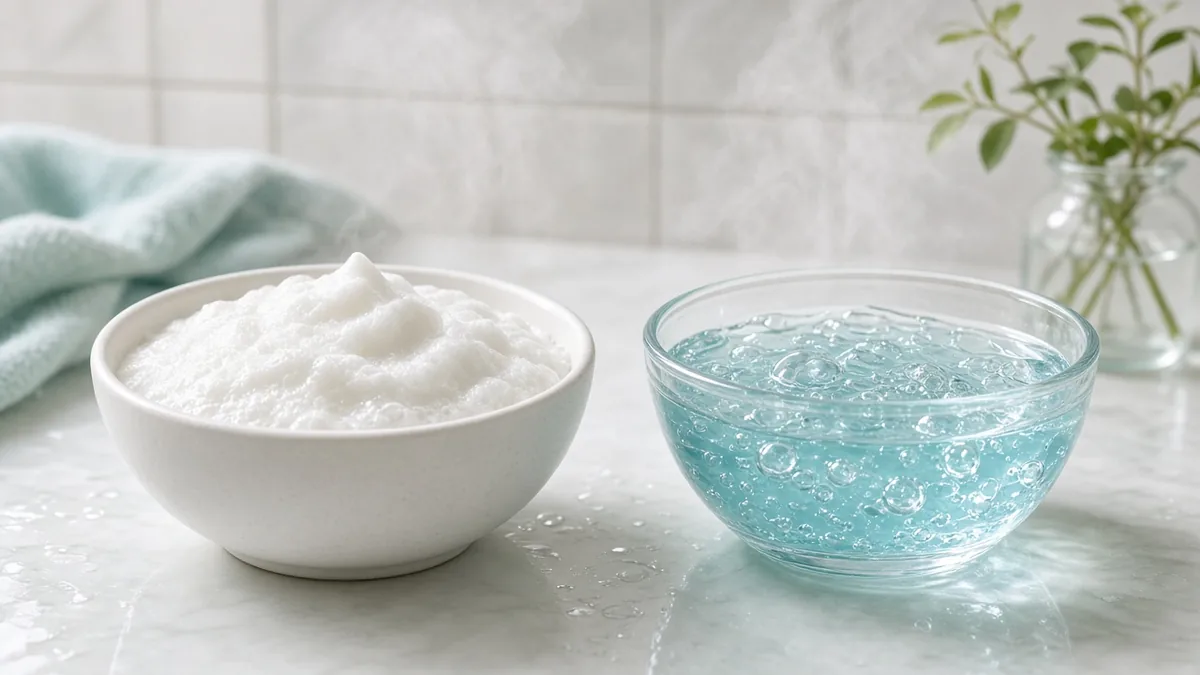
Body wash vs hand soap is less about two completely different kinds of cleanser and more about how each formula is meant to be used. Both may use surfactants—cleansing ingredients that help oil and everyday soil rinse away—but hand soap is used repeatedly on a small area, while body wash covers much more skin. The label alone cannot tell you how strong, fragranced, conditioning, or easy to rinse a formula will feel. An occasional swap is usually a practical question; daily interchange is a formula-and-skin-response question. Start with the intended use, then check how your own skin feels after rinsing.
Key takeaways
- The labels are not the whole formula. Many products called soap are actually synthetic-detergent cleansers.
- Frequency changes the experience. Hands may be washed many times a day, while a body cleanser is usually used less often over a larger area.
- A one-time substitution is not the same as a routine. Pay attention to tightness, stinging, lingering fragrance, and residue.
- Dry or reactive skin needs a gentler decision rule. Choose the product that cleans without leaving skin uncomfortable after rinsing.
The short answer: similar job, different use context
Both products are designed to remove unwanted material with water, but they are not automatically interchangeable. The practical difference often comes from intended use, cleansing strength, fragrance level, viscosity, rinse feel, and how often the product touches the skin.
If you use body wash on your hands once because it is the only cleanser available, that does not mean it will fail to clean. If you use hand soap over your whole body once, that does not mean it will always cause a problem. The better question is whether that specific formula remains comfortable and appropriate when the use area and frequency change.
This is also why the comparison should not be confused with body wash versus shower gel. Shower gel and body wash share a body-cleansing context; hand soap adds a different frequency and hygiene routine.
What the labels do and do not tell you
“Soap” has a technical and regulatory meaning, but consumers often use the word for almost any wash-off cleanser. The U.S. Food and Drug Administration’s soap FAQ explains that many products sold for cleansing the body are not traditional soap in the strict sense.
“Most body cleansers, both liquid and solid, are synthetic detergent products.” — U.S. Food and Drug Administration
That matters because the name on the front—hand soap, hand wash, body wash, cleansing gel—does not by itself tell you the exact surfactant blend, fragrance load, or after-feel. Two products in the same category can feel different, while two products in different categories can have surprisingly similar ingredient structures.
The ingredient list can offer clues, but it still does not predict the whole experience. Concentration, combinations of cleansing ingredients, thickeners, conditioning agents, and fragrance all affect how a cleanser foams and rinses.
How intended use changes the practical choice
The clearest difference is the routine around the product.
| Decision factor | Hand soap | Body wash |
|---|---|---|
| Typical use area | Hands | Most of the body |
| Typical frequency | Often several times a day | Usually once a day or less |
| Main practical goal | Quick, repeatable hand cleansing | Comfortable cleansing across a larger area |
| Common user concern | Dryness from repeated washing | Tightness, fragrance, or residue over more skin |
| Packaging pattern | Sink-side pump or refill | Shower bottle, pump, or pouch |
Repeated handwashing can make even a reasonable cleanser feel drying if the user’s skin barrier is already stressed. On the other hand, spreading a highly fragranced hand wash over the chest, neck, and other sensitive areas may expose more skin than the product’s usual use pattern.
Body wash may include more noticeable conditioning or after-feel ingredients, but this is not universal. A lightweight body wash can rinse very cleanly, and a hand wash can be formulated to feel mild. Judge the formula, not a stereotype about the category.
When is a temporary swap reasonable?
A temporary swap is usually easiest to evaluate when you keep the situation simple:
- The skin is intact and not already irritated.
- The product has no warning that conflicts with the new use.
- You rinse thoroughly.
- You stop if the skin feels tight, itchy, hot, or coated.
- You return to a dedicated product if the substitute is uncomfortable.
Using body wash as hand soap for a day while traveling is different from choosing it for a high-frequency workplace handwashing routine. Likewise, using hand soap in the shower once is different from applying it over the whole body every day.
For regular handwashing, convenience also matters. A sink-side pump that dispenses and rinses quickly is more practical than a slippery shower bottle. For regular body cleansing, spread, fragrance, and after-rinse comfort become more important because the exposure area is larger.
What should dry or sensitive skin watch for?
Dry or reactive skin should use comfort after rinsing as a decision signal. The American Academy of Dermatology’s dry-skin guidance recommends gentle cleansing rather than chasing maximum lather.
AAD’s concise advice is: “Wash your skin with a gentle cleanser.” That does not identify one category as universally best. It supports a product-by-product choice based on how the skin responds.
Watch for these signs that a substitute is not working well:
- Tightness that lasts after drying
- Stinging during or after washing
- New redness, flaking, or itching
- A strong fragrance that becomes uncomfortable over a larger area
- A film that feels hard to rinse from hands or body
People with persistent eczema, cracked skin, or a suspected allergy should ask a qualified clinician for individual advice. This comparison is general cleansing guidance, not a diagnosis or treatment plan.
A quick side-by-side guide
Choose hand soap when the priority is a practical sink-side product for repeated hand cleansing. Choose body wash when the priority is spreading and rinsing comfortably over a larger area. Consider a temporary swap when you have no better option and the specific formula feels comfortable.
The choice is less clear when marketing labels overlap. In that case, compare the ingredient list, fragrance, use directions, and after-feel. If you are also deciding whether you need exfoliation rather than cleansing alone, see our guide to body scrub versus body wash.
Use this five-question cleanser check
Before making a substitute part of your routine, ask:
- Where will I use it? Hands only, or a large part of the body?
- How often will I use it? Once today, or repeatedly every day?
- How does my skin feel after rinsing? Comfortable, tight, slippery, itchy, or coated?
- Does the fragrance become too strong over the new use area?
- Would a dedicated gentle cleanser be easier to use consistently?
These questions are more useful than assuming all hand soaps are harsh or all body washes are mild.
Prink factory note
In the authorized VN-HCM-02 semi-finished formula-adjustment case, sample review and user feedback guided adjustments before approval. The relevant lesson is narrow but useful: a broad category name does not settle rinse feel or user response. This was not a controlled hand-soap/body-wash test, so it should not be read as one.
For readers evaluating formats rather than a single retail bottle, Prink’s body cleansing base category shows where formula selection begins. A separate guide explains how to choose a plant-based body wash without assuming “plant-based” automatically means gentler.
Frequently asked questions
Can you use hand soap as body wash once?
Usually, a one-time use is a comfort question rather than a category rule. Rinse well and stop if the product causes tightness, stinging, itching, or an unpleasant film.
Can you use body wash to wash your hands?
Body wash can remove everyday oil and soil, but a particular formula may be less convenient at the sink or may leave more after-feel than you want for repeated handwashing. Follow the product directions and use an appropriate hand-cleansing product when the setting requires one.
Is hand soap stronger than body wash?
Not always. Some hand soaps are designed for frequent use and feel mild; some body washes cleanse very thoroughly. The full formula and concentration matter more than the category name.
Which is better for dry skin?
Choose the product that cleans without persistent tightness or irritation. Look for a gentle formula, use warm rather than very hot water, rinse thoroughly, and moisturize if needed.
Does more foam mean better cleaning?
No. Foam changes the sensory experience, but high lather is not a simple measure of how suitable a cleanser is for your skin or routine.