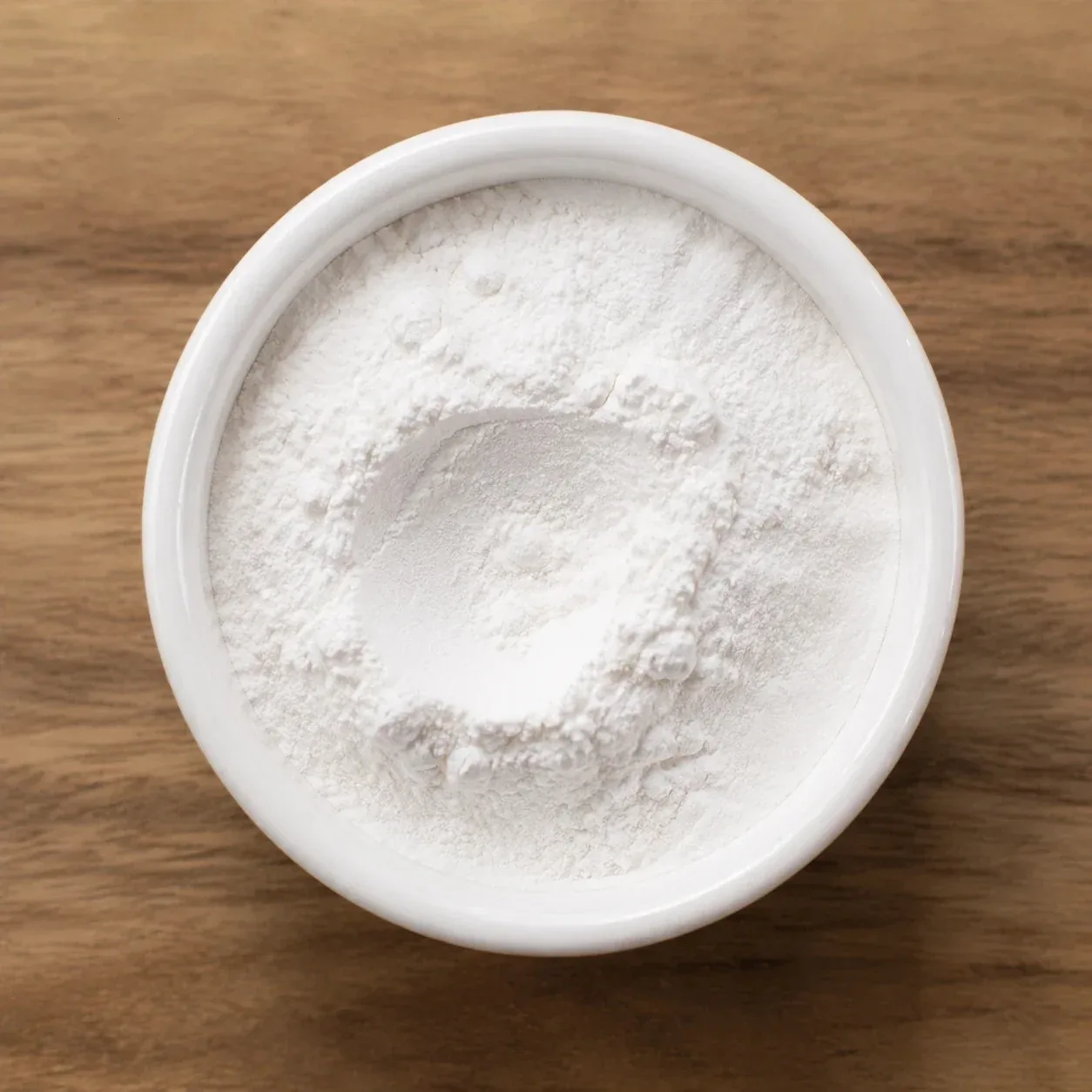
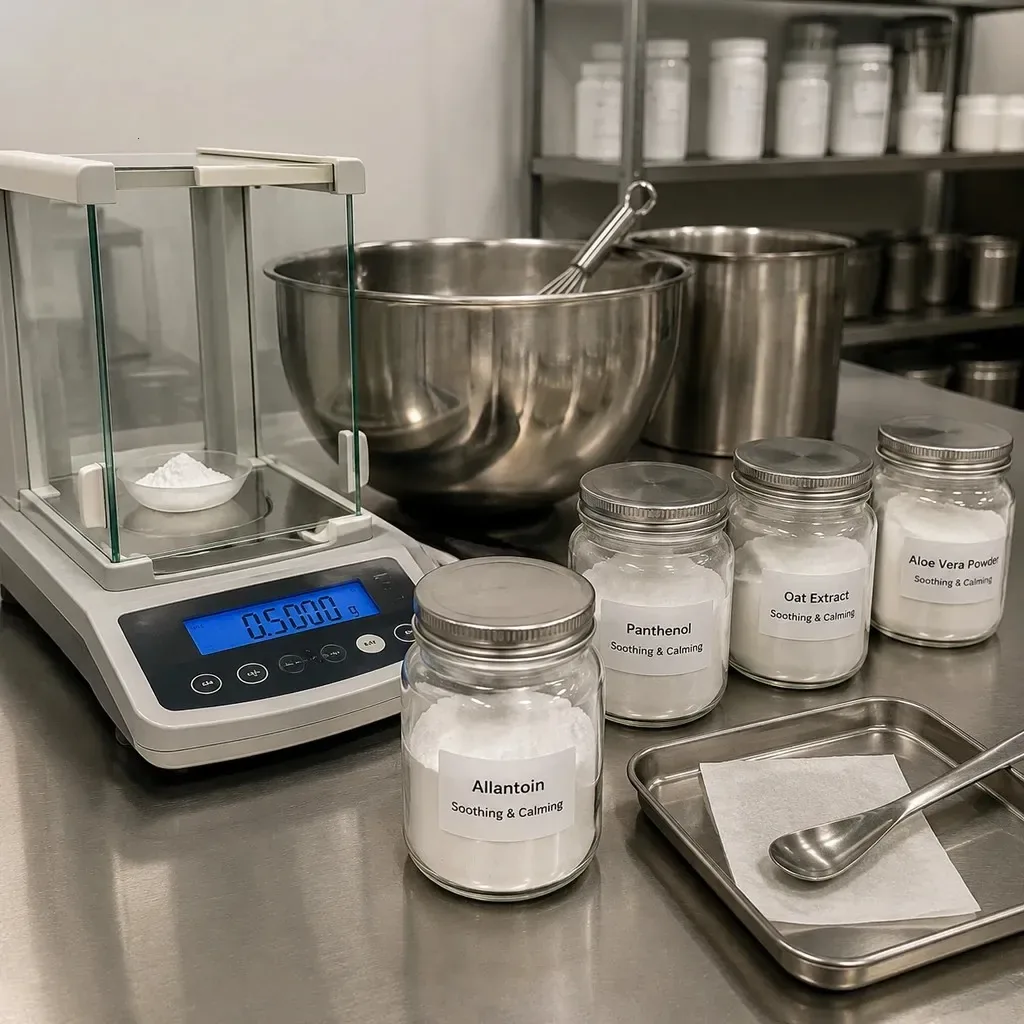
White Allantoin powder in a white dish
Allantoin detail image 2
Allantoin detail image 3
HYDRATING & BARRIER / RAW MATERIALSCustomizableSamples available

Product overview

The raw-material record lists Allantoin for soothing and calming in the Hydrating & Barrier category.

What should buyers know about Allantoin before sourcing it?

Allantoin appears in the Hydrating & Barrier group for soothing and calming and records its cosmetic role as skin protectant-class cosmetic, while the final formula and material grade determine its finished-product role.

How can a formulator test Allantoin before scale-up?

To assess Allantoin for soothing and calming, review a small sample in the intended formula and record dispersion and compatibility against the selected grade documents.

What technical documents should be checked before using Allantoin?

The Hydrating & Barrier entry identifies Allantoin; confirm identity, grade and any relevant lot records from current supplier documents.

Formula customization
Sample review first
Quality check before dispatch
Batch documents on request
WhatsApp

Formula overview

Face and personal care

Product Highlights

  • Hydrating & Barrier · Face and personal care
  • Functional formula support
  • Actives cover soothing solid, humectant, emollient, butter
  • 5 documented key materials on this SKU
  • Samples available (Laboratory sample available on request)

Key ingredients

  • Allantoin: 0.2%

  • Glycerin: 4%

  • Squalane: 3%

  • Butyrospermum Parkii Butter: 4%

  • Panthenol: 2%

Percentages are the guide levels recorded for this SKU. They describe composition, not a drug effect or a batch assay.

Attributes

  • Cosmetic grade
  • Formula-ready
  • Customizable use level
  • Function-led ingredient
  • Cruelty-free
  • Suitable for brand formulas
  • Chassis compatible
  • Clear cosmetic role

Key ingredients

Key Ingredients & Their Benefits

Allantoin lists the recorded identity of the named material below. Typical % values are formulation guides for a finished chassis that uses this material — not confirmed batch assays for this raw-material SKU.

Formula reference — key actives

IngredientPrimary FunctionKey BenefitsCompliance & Market ProofTypical %
AllantoinSkin protectant-class cosmeticAllantoin is a low-dose comfort solid. US skin-protectant wording is not used unless the finished SKU is an OTC drug.—0.2%
GlycerinHumectantThe glycerin reference is used to retain water in the aqueous phase.—4%
SqualaneLight plant-derived emollientThe plant-origin squalane provides a slipping feel while mineral oil is excluded.—3%
Butyrospermum Parkii ButterShea butterRefined shea is the cushion butter. Refined grade stays paler than crude shea.—4%
PanthenolHumectant / soothingPro-vitamin B5 softens feel and supports comfort in leave-on and rinse-off guides.—2%

For a raw-material SKU, the first row is the material identity and the other rows are finished-formula partners formulators often specify with it. They are not the composition of the raw drum. Typical % is a formulation guide for allantoin, not a batch assay or a COA. Water is the balance of water-based chassis. Texture family: cream. No fragrance oil is built in; scent stays a buyer option. Cosmetic claims only. Run challenge, stability and pack tests on the confirmed batch. Do not use this guide as a drug, whitening, acne, antiperspirant, sunscreen, or hair-growth claim.

Full INCI ingredient list

View ingredient names in one place

Aqua (Water), Allantoin, Glycerin, Squalane, Butyrospermum Parkii Butter, Panthenol, Ethylhexylglycerin, Sodium Benzoate, Potassium Sorbate, Citric Acid.

Ingredient encyclopedia — customization details

Deep-dive notes for the lead actives in this chassis: identity, use levels, regulatory framing, safety language, and stability/packaging guidance for professional development.

Allantoin

Skin protectant-class cosmetic

1. INCI & CAS

INCI: Allantoin · CAS: 97-59-6

2. Role in the formula

Allantoin is used around 0.1–0.5% in cosmetic leave-ons. This bulk listing does not by itself make an OTC skin-protectant claim.

3. Typical use levels (formulation guide)

  • Creams, gels and washes: 0.1–0.5% in this reference.

Dissolve into warm water. It recrystallises if the level is too high for the solvent.

4. Regulatory sources & global compliance

  • Use CosIng's information on Allantoin as a reference, then verify the specific grade and intended use under market rules.
  • EU market placement under Regulation (EC) No 1223/2009 requires a safety review of the finished cosmetic in which Allantoin is used before the cosmetic is placed on the EU market.
  • Use the supplier TDS to confirm grade-specific details for Allantoin and review the destination market's requirements.

5. Safety & risk assessment

This level is a cosmetic-formulation guide; the listed level does not itself confer drug or OTC status while finished-product patch and stability testing remain necessary.

6. Stability & packaging

Hold the bulk material in a sealed, cool place shielded from light; for oxidation-sensitive formulas, consider an airless or pump pack; confirm compatibility and stability using the selected formula and pack.

7. Claims language (Do / Don’t)

  • The formulation note describes Allantoin as part of a cosmetic direction focused on low-dose allantoin.
  • This product entry does not support drug-treatment outcomes, clinical cures, or certifications not documented for the SKU.
  • The available details for Allantoin should not be cited in support of whitening, acne treatment, antiperspirant action, sunscreen use, or hair-growth outcomes.

Glycerin

Humectant

1. INCI & CAS

INCI: Glycerin · CAS: 56-81-5

2. Role in the formula

The glycerin note covers its polyol-humectant role in washes, gels, and emulsions and gives a formulation guide level.

3. Typical use levels (formulation guide)

  • The gels and serums use-level reference is 3–8% in this reference.
  • For creams, the reference gives 2–5%.
  • Rinse-off: 2–4% in this reference.

The water phase is the addition point for Glycerin; a separate melt is unnecessary.

4. Regulatory sources & global compliance

  • Treat any CosIng entry for Glycerin as a reference only; verify the grade and intended use under current market rules.
  • Regulation (EC) No 1223/2009 requires the final cosmetic with Glycerin to undergo a safety assessment at the level of the finished cosmetic product.
  • Use the supplier TDS to confirm grade-specific details for Glycerin and review the destination market's requirements.
5. Safety & risk assessment

The stated concentration is a cosmetic-development reference; it should not be read as a drug authorization or OTC listing with patch and stability testing still needed for the completed formula.

6. Stability & packaging

Store the bulk in a closed container in a cool, shaded place; choose a package with oxidation sensitivity in view; use batch testing to verify stability and package compatibility.

7. Claims language (Do / Don’t)

  • The cosmetic formulation concept for Glycerin centers on humectant function.
  • The formulation note does not support drug effects, cures, or certification claims that go beyond the documented ingredient information.
  • The formulation record for Glycerin should not be used to substantiate a whitening effect, acne treatment, perspiration control, sun protection, or hair growth.

Squalane

Light plant-derived emollient

1. INCI & CAS

INCI: Squalane · CAS: 111-01-3

2. Role in the formula

Squalane provides the referenced hydrocarbon-emollient role in a plant-derived grade; mineral oil is not part of this guide.

3. Typical use levels (formulation guide)

  • The formulation record indicates 2–6% for gel-creams in this reference.
  • The guide range for dry oils is 10–30% in this reference.
  • For balms, the reference gives 5–15%.

Use the oil phase to introduce Squalane; a high-shear wax stage is not specified.

4. Regulatory sources & global compliance

  • The CosIng record for Squalane, where listed, is informational rather than product-specific authorization.
  • EU market placement under Regulation (EC) No 1223/2009 requires the completed product containing Squalane to receive its own safety assessment in the final product context.
  • Confirm the received Squalane grade against supplier documentation, then verify the intended market's filing requirements.

5. Safety & risk assessment

This formulation note gives a cosmetic-use reference level; it should not be read as a drug authorization or OTC listing and the finished formula still needs patch and stability testing.

6. Stability & packaging

For bulk storage, avoid warmth and direct sun and keep the container closed; consider an airless or pump format when oxidation sensitivity warrants it; verify the chosen pack against the tested formula.

7. Claims language (Do / Don’t)

  • The cosmetic formulation concept for Squalane centers on a light-emollient role.
  • This ingredient reference cannot substantiate therapeutic effects, curative outcomes, or unsupported certification statements.
  • The formulation record for Squalane does not establish a whitening result, acne-treatment effect, antiperspirant use, sunscreen performance, or hair growth.
  • EU CosIng · formulation guide, not a batch COA

Stability & QA protocol for the finished chassis

These checks are the professional release path for a finished leave-on chassis that uses this material. They describe what we verify before commercial fill — they are not published batch results for this raw-material SKU.

  • Accelerated & real-time stabilityTrack appearance, odour, pH and viscosity at agreed temperatures for the target fill and pack.
  • Freeze–thaw / thermal cyclingConfirm no phase split, precipitation or irreversible darkening after cycling.
  • Preservation challengeValidate the preservative system against the selected formula and packaging before scale-up.
  • Light / packaging compatibilityPrefer opaque or UV-protective packs where actives need light protection; check leachables and pump/dropper fit.
  • pH window controlHold the finished chassis near pH 5.0–6.0 unless the approved brief states otherwise.
  • Document gateRelease only after TDS/SDS, specification and batch COA identity are approved for the chosen material grade.
Create your skin care line

How we work with you

01

Custom Formula

Made for you

02

Sample Trial

From 50 kg

03

Wholesale Order

Flexible volume

04

Long Term Partner

Reliable supply

Certified Quality & Safety Assurance

Under strict ISO 22716 GMP and U.S. FDA Cosmetic GMP site records from SGS (CN21/31217, CN21/31218), batch release and document packs support export buyers when production records exist.

  • SGS Certified
  • GMP good manufacturing practice markGMP Certified
  • ISO quality system markISO Quality
  • ISO 22716 GMP
  • US FDA COSMETIC GMP
  • SGS ISO 22716 Cosmetic GMP

    CN21/31217 · Valid to 17 Jul 2027 · Holder: Guangzhou Yuanxu Pharmaceutical

  • SGS US FDA Cosmetic GMP

    CN21/31218 · Valid to 17 Jul 2027 · Holder: Guangzhou Yuanxu Pharmaceutical

  • Foreign Trade Operator Registration

    Official company filing · China

  • UK Distributor Letter of Authorization

    Distributor authorization · United Kingdom

  • Vietnam Import and Distribution Letter of Authorization

    Import and distribution · Vietnam

  • Free Sale Certificate Authentication

    CCPIT certificate · 2024

  • Product Test Report

    SQTT laboratory · CMA accredited

  • Transport Identification Report

    Non-restricted goods by sea · CNAS

  • Safety Data Sheet

    SDS · Version 6.4

Certificate holder for the manufacturing site: Guangzhou Yuanxu Pharmaceutical Co., Ltd. Guangzhou Prink International Cosmetics Co., Ltd. uses this site; the two companies remain separately registered and are not merged. Check status in the SGS Certified Client Directory

Customer Reviews

No reviews yet

How customer reviews and ratings work?

Review this product

Share your thoughts with other customers

0 Questions
Showing 0-0 of 0
Common questions about this product: Is this product durable?
Browse all Raw Materials

Best Sellers