
Key takeaways
- Use a container and wick intended for candles, and follow the wax supplier's processing directions.
- Change one variable at a time. A new fragrance, vessel diameter, or wick can change the burn result.
- Record actual heating, mixing, pouring, cooling, and burn observations instead of copying a universal time or temperature.
- A first burn test cannot make an unsafe design safe; stop when the vessel, flame, soot, or heat behavior is concerning.
What materials and records should you prepare?
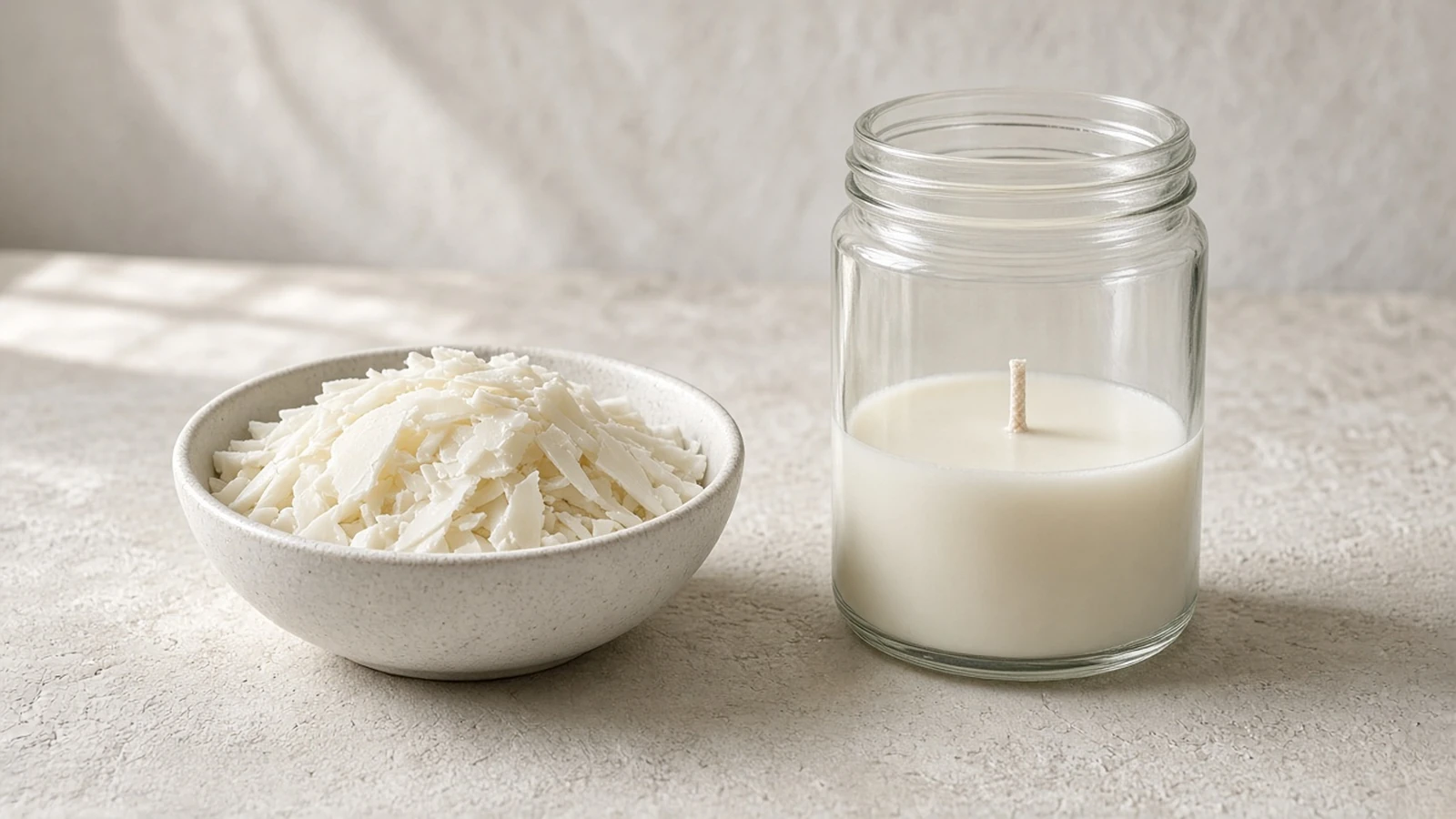
Gather candle wax, a compatible wick, a candle-suitable container, a way to center the wick, an accurate scale, a thermometer, and clean equipment for melting and pouring. Use materials with supplier specifications rather than an unlabeled jar or unknown wick. Put the work area on a stable, heat-resistant surface and keep flammables away.
Write a batch sheet before heating: wax and fragrance names and lots, vessel size and material, wick specification, target batch mass, supplier processing guidance, and the variables you plan to compare. If you want to compare two wicks, make otherwise matched candles. Our guide to candle wick types explains terminology; this article focuses on the complete build and test sequence.
The CPSC candle business guidance points makers to standards covering labeling, fire safety, and glass containers. Treat those as design and testing inputs, not as proof that a chosen jar or wick is safe without evaluation.
How do you match wax, vessel, wick, and fragrance?
Start with the wax supplier's documented range for the wax and container format. Vessel diameter affects how far the melted pool must reach. Wick construction and size affect fuel delivery, flame height, container heat, soot, and whether wax is left at the edge. Fragrance can alter burn behavior and must be compatible with the wax at an amount supported by the supplier.
Do not pick a wick by fragrance name alone or assume the same wick works across all wax blends. A practical trial matrix uses one vessel and wax, then compares a small number of supplier-recommended wick candidates. If you change fragrance, repeat the burn assessment. The CPSC candle standards page lists separate voluntary standards for warning labels, fire behavior, and containers; each addresses a different part of the finished product.
What happens from melting through pouring?
Measure each material by mass. Melt the wax using the equipment and temperature guidance for that particular wax, without leaving heat unattended. Add fragrance only when the wax supplier's instructions allow it, mix consistently, and document what you did. Secure and center the wick before pouring into the clean, dry vessel.
After pouring, let candles cool undisturbed under consistent conditions. Look for wick drift, sinkholes, cracks, frosting, poor adhesion, or an uneven top. Appearance may improve with a process adjustment, but a smooth top does not predict a safe burn. Label each trial so you can connect later observations to its wax, vessel, wick, fragrance, and process record.
Avoid a universal instruction such as “always pour at 60°C.” Different waxes and additives behave differently. The useful figure is the value recommended for your materials, followed by your own recorded result and repeat testing.
How do you assess the first burn test?
Once the wax is ready to test according to its supplier, place the candle on a stable heat-resistant surface, away from drafts and combustible materials. Follow a controlled test procedure and record flame behavior, soot, melt pool, wick condition, and vessel temperature across multiple burns. Never use an unattended burning candle as a test method.
The U.S. Fire Administration's candle-safety guidance gives a plain consumer rule:
“Blow out candles when you leave a room or home, or when you go to bed.” — U.S. Fire Administration
For a maker, that warning is also a reminder that the product must be designed for realistic use, labeled clearly, and assessed as a whole. If the flame is excessive, soot is heavy, the wick mushrooms, the vessel becomes concerningly hot, or the candle behaves unpredictably near the end of life, stop and revise the design. One attractive test candle is not enough to release a line.
Which defects mean you should revise the batch?
Separate appearance defects from burn or safety defects. Frosting, small sinkholes, and surface texture may indicate cooling or formulation adjustments. Persistent tunneling, heavy soot, repeated self-extinguishing, a moving wick, or a hot or damaged vessel call for a new combination and another burn series. Do not hide a failed burn with a different label.
Keep a retained sample and repeat the best candidate with the same materials and recorded method. For candles intended for sale, review the applicable CPSC requirements and voluntary standards for the product and market. A simple decision rule helps: if you cannot identify why a candle passed or failed, the batch record is not yet detailed enough to support a repeatable product.