
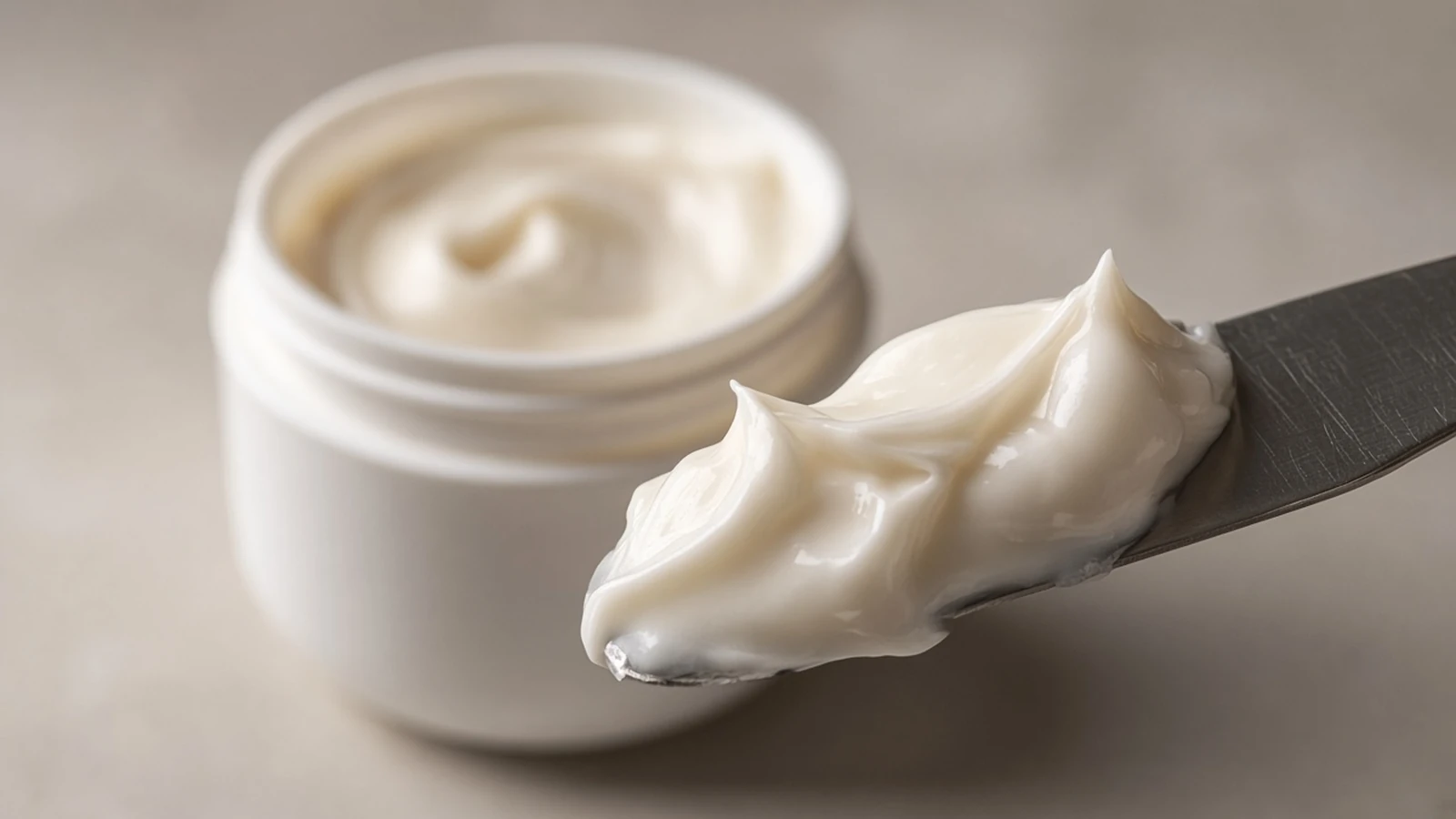
This is a design guide for a rinse-off conditioner. It is not a tested Prink recipe, a universal percentage sheet or permission to sell a home experiment. A leave-in product remains on the hair and needs its own brief and assessment.
Key takeaways
- Specify hair type, application amount, wet-combing slip and desired feel after rinsing before choosing an ingredient list.
- A cationic conditioning agent and the emulsion structure have different jobs. More oil or more thickness does not automatically improve detangling.
- Supplier instructions for the selected emulsifier, polymer and preservative determine the useful process; no single heating or phase-order rule fits every system.
- Compare pilot versions on the same hair, with the same wash, dose and rinse method. Record pH, appearance, viscosity and package behavior as well as feel.
- A promising bench sample still needs appropriate stability, microbial and safety checks before commercial release.
Set a rinse-off target before choosing ingredients
Write a brief a tester can act on: for example, “a rinse-off conditioner for fine hair that spreads through wet lengths, eases combing and rinses without a heavy residue.” That is more useful than “nourishing conditioner.” State the hair sample or test group, the shampoo used first, the amount applied, the contact time and how thoroughly it will be rinsed. Otherwise, a better result may come from a different test rather than a better formula.
Choose one primary outcome for the first pilot. For fine hair, a light after-feel may matter more than a very thick cream. A richer formula may be appropriate for a different brief, but do not assume it will suit everyone with curls or dry hair. Also decide whether the product must leave a pump, squeeze tube or wide-mouth jar. The opening and viscosity need to work together.
Joan Morais's formulating hair conditioner tutorial distinguishes rinse-off and leave-in uses and asks the formulator to consider hair type, washing habits and shampoo pairing. Its practical focus is short:
“One of the most important functions for a conditioner is to provide slip.” — Joan Morais, Formulating Hair Conditioner
Slip is how easily wet hair moves against itself or a comb during use. It is a target to test, not a property established by seeing “conditioning” on an ingredient label. A separate ingredient-label guide covers those roles; this article continues with how to build and compare a formula.
Choose the conditioning and emulsion system
A typical creamy rinse-off conditioner has a water phase, a conditioning agent, ingredients that build body, and a preservation system appropriate to the finished product. Many conditioning agents are cationic, meaning positively charged. Their attraction to negatively charged sites on hair can help material remain after rinsing and improve combing feel. The effect depends on the whole formula, the hair and the use test; a cationic INCI name alone is not a performance guarantee.
Fatty alcohols such as cetyl or cetearyl alcohol often help build a cream's body and feel. They are not the same thing as adding more conditioning agent. Oil and other emollients can change richness and after-feel, but they also change the emulsion and may weigh hair down. A formulator should decide the role of each addition before adjusting its amount. If the chosen system is incompatible with another charged ingredient, extra stirring will not solve the underlying compatibility problem.
| Design choice | Question for the first pilot | What to compare |
|---|---|---|
| Conditioning system | Does it give enough wet-combing slip at the intended use amount? | Comb movement and drag under the same wash and rinse |
| Body and viscosity | Does the cream spread and leave its package without being runny? | Flow after a defined rest and dispensing from the chosen closure |
| Emollient level | Does it improve feel without unwanted weight? | Feel immediately after rinsing and after the hair dries |
| Fragrance and extras | Are they necessary for the brief and compatible with the base? | A plain control beside one changed version |
The It's All in My Hands conditioner example demonstrates one author's cationic recipe and process. Treat its ingredient amounts and addition order as an example for that system. The author's own disclaimer excludes commercial use. Follow current supplier instructions and test a changed formula rather than borrowing the example as a finished specification.
Build a pilot batch from supplier instructions
Before weighing, record the exact trade name and supplier grade of every raw material. Write down its intended function, supplier use guidance, recommended phase, processing conditions and relevant compatibility limits. Two products with similar INCI lists can behave differently because their supplied concentrations and supporting ingredients differ. The first batch sheet should record actual weights, lot numbers, equipment, vessel size, mixing sequence and observations.
For a creamy emulsion, prepare the phases according to the selected system's supplier method. Measure and record the temperatures actually used; do not import a universal heat point or a “water must always go into oil” rule from one online recipe. Add later ingredients only at conditions compatible with their own supplier guidance. Check the batch after it has rested before deciding that its initial viscosity is final. If a new fragrance or botanical is part of the brief, keep an unscented or otherwise simpler control to isolate its effect.
One authorized Prink formula-adjustment record, VN-HCM-02, documented versioned samples, sensory feedback and technical notes. It did not identify a conditioner or report conditioner test results. The transferable practice is the record itself: change one variable, label the next sample and compare it with the previous version under the same conditions.
Test slip, rinse feel and the finished package
Use a written panel or laboratory comparison that keeps hair sample, shampoo, water, product dose, contact time and rinsing consistent. Ask testers to distinguish spread during application, wet-combing drag, feel after rinsing and feel once dry. “Feels softer” without a comparison method is difficult to interpret; a record of the conditions makes a later adjustment possible.
| Record | Minimum useful observation |
|---|---|
| Batch identity | Formula revision, raw-material lots, process and sample code |
| Physical state | Appearance, odor, viscosity or flow after a stated rest, and any separation |
| pH | Method, measured value, adjustment and time of measurement |
| Use performance | Dose, hair or panel conditions, wet-combing slip, rinse feel and dry feel |
| Package | Filling, dispensing, leakage and any change after product contacts the intended container |
| Follow-up | Storage condition, observation date and next question to test |
The preservation system must be evaluated in the complete water-containing formula, including the actual container and intended use. The FDA's microbiological safety guidance identifies water, raw materials, manufacturing and consumer use as potential contamination routes. This US agency guidance is a warning about possible routes, not approval of a particular preservative or a local rule for every market. A pleasant smell or unchanged color does not prove microbiological safety.
Troubleshoot weight, drag and separation
If the conditioner feels heavy after rinsing, check the applied dose and rinse method first. Then compare a single change to the conditioning or emollient system against the original control. Do not remove several ingredients at once and call the lighter feel proof of which ingredient caused it.
If wet combing still has too much drag, distinguish a formulation problem from the test. Was the same shampoo used, and was the product distributed through the same amount of hair? A thicker cream may spread less evenly even when the beaker sample looks richer. Revisit the selected conditioning system and supplier guidance before adding more oil.
If the emulsion separates or changes viscosity, compare processing records, raw-material grades and the timing of each addition. A short bench observation cannot establish long-term stability. Retain labeled samples in the intended package and choose appropriate physical and microbial testing for the final formula and market.
Teams that need a working base or guided development can inspect Prink's hair and scalp bases and cosmetic formulation training. Those pages describe available paths; neither replaces testing a specific finished conditioner.
Frequently asked questions
Is there one percentage recipe for every hair type?
No. Hair type, target rinse feel, chosen conditioning system, raw-material grades and package all affect the result. A published recipe can teach a method, but changing its ingredients requires a new pilot and evaluation.
Can a rinse-off conditioner become a leave-in by using less?
Do not assume so. The product remains on hair and may contact skin for longer. Its feel, exposure, packaging, preservation and claims need a separate brief and appropriate assessment.
Must a formula use BTMS?
No single trade ingredient is mandatory for every conditioner. Choose a conditioning system for the target result, then check the supplier's composition and instructions. Compare real performance in the complete formula.
Can I copy a pH number from another recipe?
Record the measured pH of your own finished sample and check compatibility and safety for its ingredients and intended market. Another recipe's number is not evidence that your changed system is suitable.