
If you are learning to formulate, begin with one clear target, such as a light daily wash or a stronger clarifying feel. Change one variable at a time in small pilots. That makes a failed sample useful evidence rather than a reason to start again from memory.
Key takeaways
- Decide who will use the shampoo and what clean, rinse and after-feel mean for that product.
- Compare surfactants by their supplied active content, not just the weight poured from a bottle.
- Add ingredients in a planned sequence; fragrance, salt and polymers can change clarity or flow.
- Record pH, appearance, viscosity or flow, and rinse performance using the same method each time.
- Treat a promising bench sample as a candidate. It still needs appropriate finished-product and package checks before commercial use.
Define the wash experience before choosing ingredients
Start with a short product brief. Is the target a light daily shampoo, a rich conditioning wash, or a clarifying product for heavy styling residue? Define the intended hair and scalp use, foam preference, rinse speed, wet combing feel, fragrance level, bottle type and visible appearance. A transparent gel and an opaque conditioning wash may need different structures even when both are called shampoo.
Write down what the product must do and what is merely a preference. For example, "rinses without a coated feel" can be checked in a use trial; "premium" cannot. A clear brief helps you compare samples without changing the goal after every batch.
The Whole Elise natural shampoo tutorial publishes a concrete small-batch example with water, surfactants, pH adjustment and later thickening. It is useful for seeing an ingredient sequence. It is that author's example, not a Prink-tested formula or a universal production recipe. Compare its ingredient choices with your own supplier specifications before trying a different target.
Build the surfactant system
A surfactant helps water lift and rinse away oily residue. Most liquid shampoos use a blend because cleaning strength, foam, mildness, viscosity and conditioning feel move together. The Silverson shampoo application report describes the blend as a balance of properties:
"A mixture of products is normally used to obtain the desired balance of properties." — Silverson shampoo application report
Begin with ingredient roles, then select actual materials using supplier documentation:
| Role | What to decide | What to check in the pilot |
|---|---|---|
| Main cleanser | Which surfactant delivers the target wash? | Cleaning and rinse feel at the intended use level |
| Co-surfactant | Does a second surfactant improve the blend? | Foam, feel, clarity and compatibility |
| Conditioner or emollient | Is additional slip needed after rinsing? | Wet combing feel and unwanted buildup |
| Thickener | What flow suits the bottle? | Viscosity after the formula has rested |
| Fragrance and appearance | Are scent and visual targets compatible? | Haze, separation, color change and viscosity shift |
Active matter is the surfactant portion of a purchased material; the rest may be water or other ingredients. "Ten percent surfactant" is incomplete if you have not said whether that means the purchased solution or its active portion. A diluted liquid contributes a different amount of active matter from a concentrated grade at the same weighed amount. Record the supplier's active content before comparing two pilots.
The Wholesale Supplies Plus guide to gentle shampoo products shows how a base or surfactant choice changes the type of cleanser you can make. Its product examples are a starting point for questions, not evidence that any one ingredient is gentle in every finished formula.
Plan a workable pilot sequence
A pilot batch is a small trial made from a written formula and method. Record the lot and supplied form of each ingredient. The exact order and temperature depend on the raw-material instructions, but a useful planning sequence is:
- Prepare the water phase. Confirm water quality, vessel cleanliness and whether a polymer needs to be pre-dispersed or hydrated before other materials.
- Blend the surfactants deliberately. Add and mix at a rate that distributes the materials without unnecessary air. Some concentrates are difficult to dilute after the batch becomes thick.
- Add compatible supporting ingredients. Follow supplier directions for conditioners, solubilizers, fragrance and any heat-sensitive material. Check clarity after each addition.
- Measure and adjust pH. Use a calibrated method suitable for the formula. Record both the reading and the amount of adjuster; do not borrow a universal target from a different recipe.
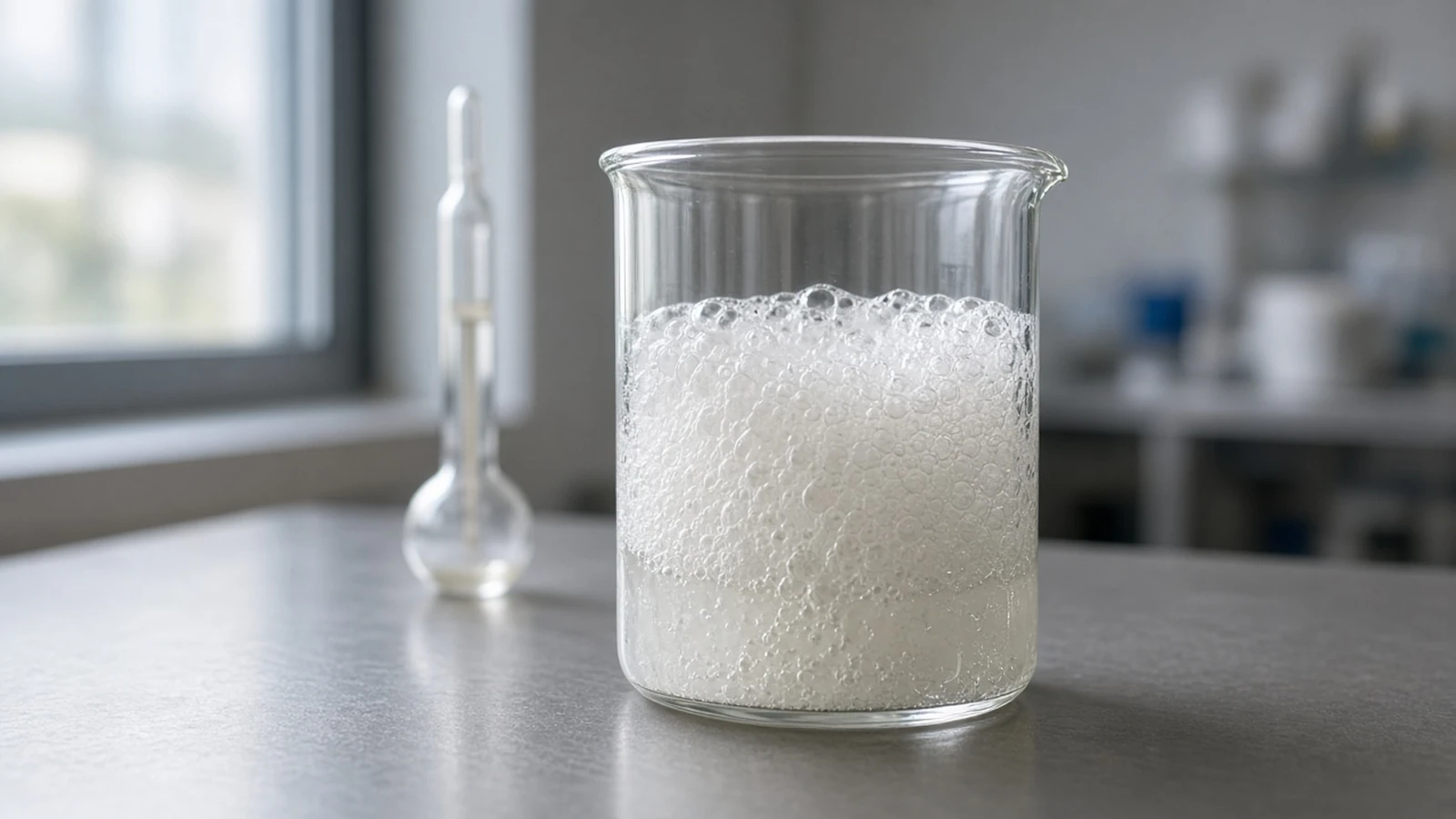
- Set final flow. Add the chosen viscosity modifier gradually if the system allows it, then remeasure after a defined rest period. A foam-filled sample can appear thicker than the same liquid after air escapes.
Silverson notes that the first added ingredient is often the surfactant because viscosity builders can make dilution harder. That is a process example, not an instruction to ignore a raw-material supplier's order of addition. A gum that needs careful hydration may change your sequence. The batch sheet should say which order was actually used and why.
Record what the first batch actually does
Do not judge a shampoo only by how it looks immediately after mixing. A clear sample may clean poorly; a thick sample may lose flow after fragrance is added. Viscosity is resistance to flow, not a measure of cleaning power. Set a repeatable observation schedule and keep a retained sample in its intended package.
| Observation | Record this, not just "pass" |
|---|---|
| Appearance | Clarity, color, visible particles and air at a stated time |
| pH | Measurement method, temperature if relevant, and adjustment history |
| Flow | Instrument and setting, or a defined pour test if no instrument is available |
| Use feel | Amount used, wet hair condition, foam, rinse and wet combing notes |
| Package | Bottle, closure, dispensing behavior and any visible interaction |
These are development observations. They do not prove preservation, shelf life, safety or package compatibility. Decide which finished-product checks are needed for the actual formula and intended market, and document who will perform them. For an overview of the later stage, see our cosmetic product testing guide.
An authorized ingredient-application training project, CA-QC-10, recorded training materials, samples, demonstrations and assessment records for an R&D or purchasing team. It does not identify a shampoo or report a shampoo test result. Its transferable lesson is narrower: teaching the function and compatibility of each material makes a formulation worksheet more useful than an unannotated ingredient list.
Common failures and what to change first
If the first sample misses the target, diagnose the type of failure before adding another material.
- Too thin or too thick: Recheck active content, addition order, final pH and the time allowed for the system to settle. Change the thickening approach only after the measurement is repeatable.
- Hazy after fragrance: Compare an unfragranced control with the scented sample. A solubilizer change may alter foam or feel, so retest the full system.
- Dry-feeling after rinse: Review cleansing strength and conditioning balance, then compare under the same wash conditions. More foam is not proof of a better wash.
- Air or inconsistent filling: Review mixing intensity and rest or deaeration. The manufacturing method can change apparent flow even when the ingredient list is unchanged.
Keep an untouched control sample for each useful comparison. This is faster to learn from than changing fragrance, surfactant and thickener in the same trial and guessing which one mattered.
What changes when a formula moves toward production?
Once the bench formula meets its target, write a versioned specification and test the intended package. Moving to a larger vessel changes mixing, heat transfer and how easily ingredients disperse; the small-batch time and speed are not automatically transferable. Our separate cosmetic manufacturing process guide explains the material, batch-record, filling and release handoff.
For a team that needs help reproducing an approved formula, Prink's formula transfer and technical training covers agreed process order, material handling and quality checks. The learning goal remains the same whether the next batch is made in your facility or by a manufacturing partner: someone else should be able to follow the record and see why each change was made.
Frequently asked questions
Can I start from a shampoo base?
Yes, if the base supplier permits the planned customization and gives enough information to check what additions do to the finished product. A base shortens the starting ingredient list; it does not remove the need to test pH, flow, preservation and packaging after changes.
What pH should every shampoo have?
There is no single value that can be copied safely into every formula. Select the target from the finished product's ingredients, supplier guidance, intended use and applicable testing, then measure it with a documented method. Recheck after meaningful changes.
Is a stable-looking sample ready to sell?
No. A sample that looks unchanged during a short bench observation has not established microbiological control, long-term stability or package compatibility. Plan those checks for the actual formula before release.