Key Takeaways
- Body butter is a rich body moisturizer with a dense, often whipped or balm-like texture and a stronger leave-on film than typical lotion.
- People use it mainly on dry, rough, or seasonally dehydrated body areas—not as a default for every skin type or every body zone.
- Lotion is usually the lightest water-rich option; cream sits in the middle; butter sits at the richest end of common leave-on body textures.
- Apply on damp skin after bathing, start with a small amount, and reduce frequency if the finish feels greasy or pores on the chest or back feel congested.
- Skip heavy butter on acne-prone facial skin and on hot, humid days when a lighter moisturizer for dry skin may feel more comfortable.
How do people define body butter in everyday skincare?
Conclusion first: Body butter is a rich leave-on body moisturizer with a dense, often whipped or balm-like texture and a longer-lasting film than everyday lotion.
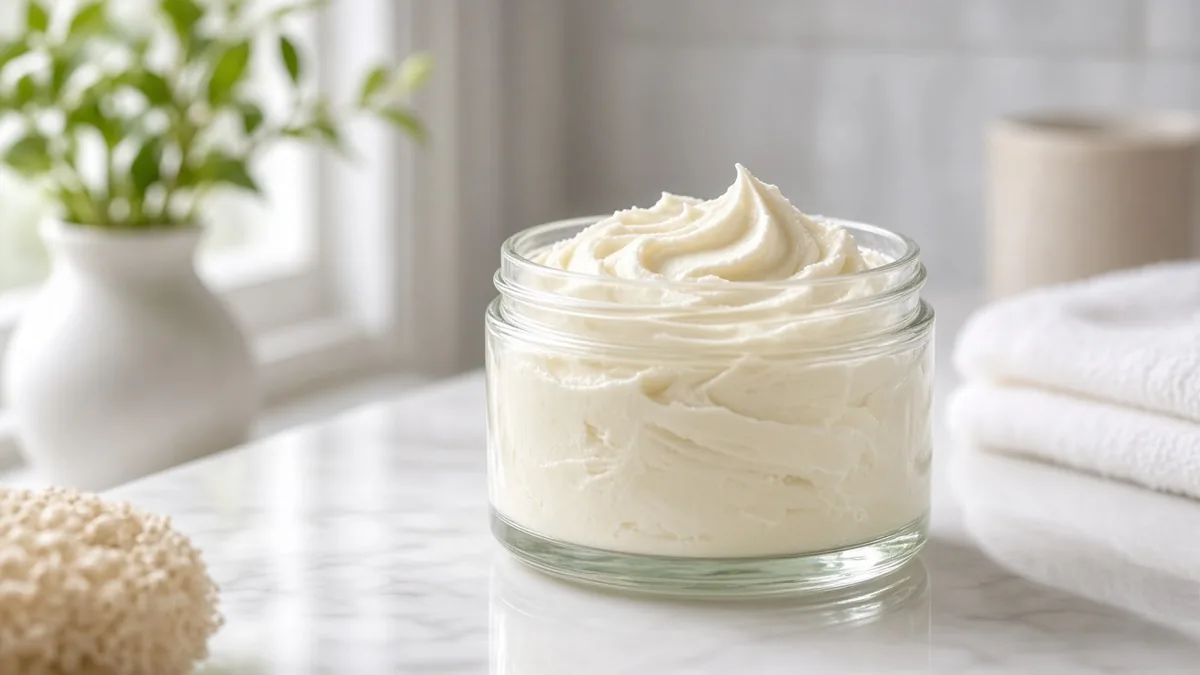
In consumer language, body butter means a leave-on body product that feels thicker than lotion and often thicker than standard cream. Many formulas are oil-rich. Some are near-anhydrous—that is, they contain little to no water. Others are still emulsions but with a high oil phase and a dense sensory profile.
The name “butter” usually points to feel, not to a single mandatory ingredient. Plant butter is a soft fat (such as shea or cocoa butter) that melts near skin temperature and supports a cushioned slip. A product can still be called body butter when the texture matches shopper expectations—even if the formula also contains esters, silicones, waxes, or water.
If a jar feels dense, spreads slowly, and leaves a soft barrier film on elbows, shins, or dry patches, shoppers will treat it as body butter. Marketing names vary. Texture and finish are the practical definition most readers need.
For labeling and safety claims in the United States, cosmetics are regulated under FDA cosmetics rules. Claims about treating disease move into drug territory. Keep product wording aligned with intended cosmetic use. The FDA states that cosmetics are articles intended to be rubbed, poured, sprinkled, or sprayed on the body for cleansing, beautifying, promoting attractiveness, or altering appearance (FDA cosmetics hub). This article is general education, not a measured test of any specific product.
“Companies and individuals who market cosmetics have a legal responsibility to ensure the safety of their products.”
Original insight (factory intake pattern, qualitative): briefs that only say “make it like a butter” without naming target zones, climate, and after-feel (matte vs cushion) usually force extra texture rounds—because “butter” is a sensory nickname, not a single formula template.
How does body butter differ from lotion and cream?
Readers comparing textures want a clear ladder. Use finish and water feel as the first filter, then adjust for climate and body area.
| Texture | Typical feel | Water / oil balance (general) | Common body use |
|---|---|---|---|
| Lotion | Light, fast-absorbing, low residue | Often higher water; thinner emulsion | Daily all-over comfort, warm climates, oily-prone body skin |
| Cream | Medium body, balanced slip | Emulsion with more structure than lotion | Everyday dry skin, hands and limbs, cooler rooms |
| Butter | Dense, slow spread, cushioned film | Oil-rich emulsion or near-anhydrous balm style | Very dry patches, overnight repair feel, winter legs and elbows |
Which dry and rough body areas benefit most?
Secondary question readers ask: what is body butter used for? The short answer is targeted moisture and comfort on dry body skin—especially areas that feel tight, flaky, or rough after washing.
Typical use cases include:
- Dry legs and shins in heated indoor air
- Rough elbows, knees, and heels that lotion does not soften enough
- Post-shave dryness on legs or underarms when a denser film feels protective
- Overnight comfort on dehydrated arms or torso after a hot shower
- Seasonal dryness when indoor heating or cold wind strips surface moisture
Body butter is less about “more fragrance” and more about film and slip. A rich oil phase can reduce transepidermal water loss in a practical sense by sitting on the surface longer. That is a general cosmetic hydration logic, not a clinical claim for a named formula.
If dryness is facial, start with a face-appropriate moisturizer instead of transferring a heavy body butter to the face. Face skin often prefers lighter face textures and different fragrance loads. For dry-skin moisturizer selection logic, see how to choose a skin moisturizer for dry skin.
When should you use body butter—and when should you skip it?
Use it when:
- Body skin feels tight within hours after bathing
- Lotion disappears quickly but dryness returns the same day
- You need overnight cushion on elbows, heels, or winter legs
- Climate is cool or dry and a rich film feels comfortable
Skip or limit it when:
- The chest, back, or shoulders clog easily with heavy leave-ons
- You are treating facial acne-prone skin (body butter is usually too occlusive and fragrant for that job)
- Humidity is high and any rich film feels sticky or traps sweat
- You prefer a matte, fast-dry finish for daytime under clothing
- Skin is broken, infected, or needs medical care—cosmetics are not treatments for disease; FDA materials explain the cosmetic vs drug boundary at a high level
Takeaway: match richness to zone and climate. A butter that helps winter shins can feel wrong on a humid commute or on an acne-prone face.
How do you apply body butter, and how often?
Conclusion first: apply a small amount on clean, slightly damp skin, massage until the film feels even, and adjust frequency by climate and residue.
How to apply
- Shower or wash as usual. Pat dry so skin is damp, not dripping.
- Scoop a pea- to dime-sized amount for one limb. Warm it between palms if the jar is firm.
- Massage in long strokes. Focus on dry patches first, then blend outward.
- Wait a few minutes before dressing if the finish is shiny.
- Wash hands if the formula leaves a lasting film on fingertips.
How often
- Very dry winter skin: once daily after bathing is a common starting point; some people add a thin evening layer on elbows or heels.
- Mild dryness: every other day or only on dry zones may be enough.
- Oily-prone torso: use sparingly, or switch those areas to lotion/cream and keep butter for legs only.
Aftercare is simple. Do not layer many heavy oils on top unless your skin clearly needs them. If redness, itching, or congestion appears, stop and reassess fragrance, essential oils, or occlusion level. General guidance only—individual tolerance varies.
For dry skin, the American Academy of Dermatology recommends applying moisturizer after bathing, while skin is still damp.
What texture and finish cues help you pick the right jar?
Shoppers often confuse “whipped,” “balm,” and “cream-butter hybrids.” Use sensory cues:
- Whipped jar: airy peaks, spreads with less drag, still richer than lotion.
- Dense balm butter: firmer scoop, melts with body heat, higher shine.
- Cream-butter hybrid: some water feel up front, then a cushioned after-feel.
Fragrance intensity matters for leave-on body products. A strong scent that feels fine in a quick rinse can feel heavy in a long-wear butter. If you are fragrance-sensitive, prefer unscented or lightly scented options and patch-test on the inner arm.
Ingredient lists on cosmetics should follow applicable labeling rules in your market. In the U.S., the FDA cosmetics pages outline labeling expectations at a high level. This guide does not invent INCI percentages or pH values.
How does body butter relate to cream bases and emulsions?
Some body butters are near-anhydrous balms. Others are structured emulsions—oil and water held together with an emulsifier system, then thickened for a butter-like spoon feel. If you are learning how emulsions are built conceptually, read how to make cream base for oil/water/emulsifier roles, home vs lab paths, and a stability checklist for learners.
For brand or formula learners exploring ready starting textures across categories, bulk bases can show how cream and lotion chassis differ in sensory intent. That link is for education on texture families, not a purchasing brief.
Prink factory note: when teams later move from education into manufacturing trials, standard paths often use a 50 kg minimum order quantity, with sampling commonly around 7–15 days on existing base routes—timelines are not a guarantee for full custom work.
What quick checklist confirms body butter is the right choice?
Use this educational checklist before you rely on a rich butter every day:
- My main problem is dry or rough body skin, not facial acne.
- Lotion alone does not last through the day on the target zones.
- Climate or indoor heating makes skin feel tight after washing.
- I can wait a few minutes for a richer film before dressing.
- Chest/back do not clog easily—or I will keep butter off those zones.
- Fragrance level feels comfortable for long wear.
- I will start with a small amount on damp skin and adjust frequency.
- I am not using this jar to treat a medical skin disease.
If most boxes are unchecked, choose a lighter cream or lotion first. If most are checked, body butter is a reasonable texture experiment for those dry zones.
FAQ
What is body butter used for?
Body butter is used to comfort dry, rough, or seasonally dehydrated body skin with a denser leave-on film than lotion. Common targets are legs, elbows, knees, and heels. It is not a universal face moisturizer and is not a medicine for skin disease.
Is body butter the same as body cream?
Not exactly. Cream usually sits in a mid-weight emulsion range. Body butter is marketed and felt as richer, slower-spreading, and more occlusive. Some hybrids blur the line; judge by finish on your skin, not only the label name.
Can you use body butter on your face?
Most people should not treat facial skin like body skin. Facial acne-prone or oily zones often dislike heavy butters. If you try a tiny amount on very dry facial patches, patch-test first and stop if congestion appears. Prefer face-labeled textures when possible.
How often should you apply body butter?
Start with once after bathing on dry days. Increase only if skin still feels tight and the finish is comfortable. Reduce if clothing picks up residue or pores feel congested. Frequency is personal and climate-dependent.
Does body butter need water to work?
Some butters are near-anhydrous and rely on oils and butters for slip and film. Others are oil-rich emulsions that still contain water. Both can feel “buttery.” Water content alone does not define the name; sensory thickness does.
Is whipped body butter lighter than a solid balm butter?
Often yes in first touch. Whipping adds air and can improve spread. It can still leave a rich film. If you need maximum cushion overnight, a denser balm style may feel more protective. Compare after-feel after five minutes, not only scoop resistance.